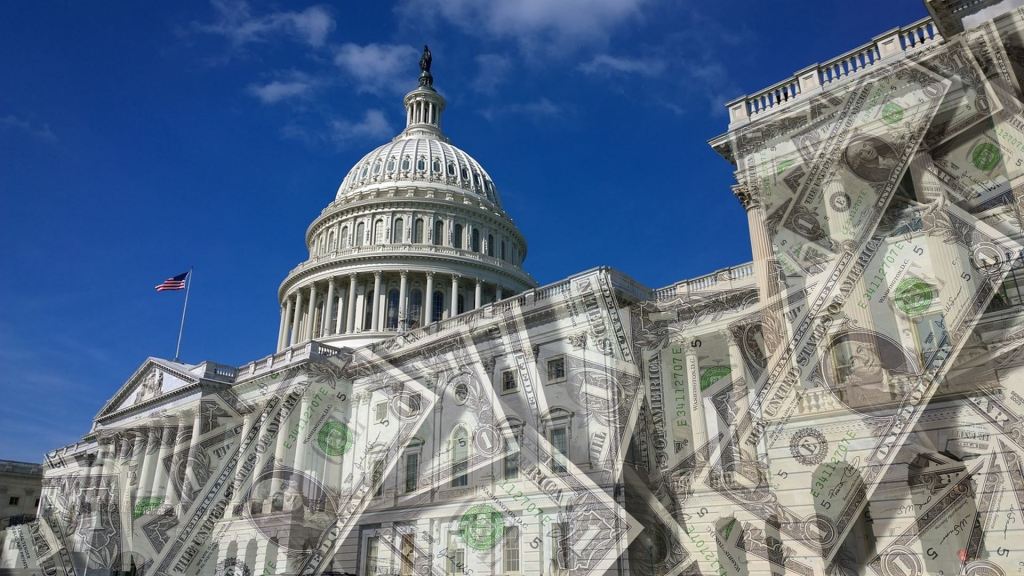
It should be very simple. Elected leaders should represent the people, be accountable to the people, spend their time serving the people, and tackle the challenges facing our country. Elections should be contests of ideas and vision, where prospective leaders make the case that they have the best plan, experience, and capability to move our country in the right direction. We should have a fair system, where people have equal opportunity to have their voices heard, and candidates have equal opportunity to share their ideas. Decisions in government should be made with a sincere effort to do the best for the great majority of Americans, free from corrupting influences. Incentives should drive our leaders to solve problems, rewarding them when they work together to do so.
Current Reality

We are very far from those ideals right now. Elected leaders are beholden to the interests of the mega-donors that enable them to be elected. Many spend over half of their time fundraising, in order to win their next election and fund their parties. Elections are contests of name recognition and mudslinging, where the real race is about raising the most cash. In the 2022 mid-terms, the candidates that spent the most money won in 93.4% of House elections and 82.3% of Senate elections. Government is barely able to function, with threatened shut-downs on a regular basis. Lobbyists often draft bills, hold fundraisers for members of congress, and offer them lucrative future positions in order to get legislation passed for their corporate clients. And the worst part is that in many cases we don’t even know who is paying to gain this influence.
Powell’s Vision for Corporate Control
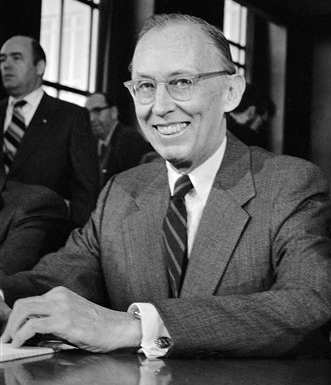
In 1971, Lewis Powell, Jr. wrote a confidential memo and made a presentation to the U.S. Chamber of Commerce outlining how the American economic system was under attack, and corporate interests needed to band together in a long term fight to for survival and control. He advocated for a plan to coordinate financial influence over campuses, the media, the political arena, and the courts. He urged business leaders that “there should be not the slightest hesitation to press vigorously in all political arenas for support of the enterprise system. Nor should there be reluctance to penalize politically those who oppose it.” Looking at the current corporate influence over lawmakers and rulings by the supreme court, it appears that this plan has been effectively carried out over the last 50 years.
Corporations Are Not Malicious
As a leader within a Fortune 500 company I have seen the lengths to which my company has gone to do the right thing, even when it is extremely hard or expensive. Corporations are a source of financial strength of our country, and I don’t think they have bad intentions…but they do have a primary focus on seeking profits. I also don’t think most political leaders are bad people. The system of incentives is leading to the problems. Government policy can have a huge positive or negative impact on a company, a billionaire, or a foreign country. This poses threats and opportunities for them. We have a system where they can contribute funds to mitigate the threats and secure the opportunities. The returns on their investment can be enormous. Even Powell’s memo has a tone of seeking to do what is right…but since he felt that the “American enterprise system” was under attack, he ecouraged corpations to protect it by any means available. If we can change the rules and incentives, we can improve the situation.
Supreme Court Strikes Down Limits
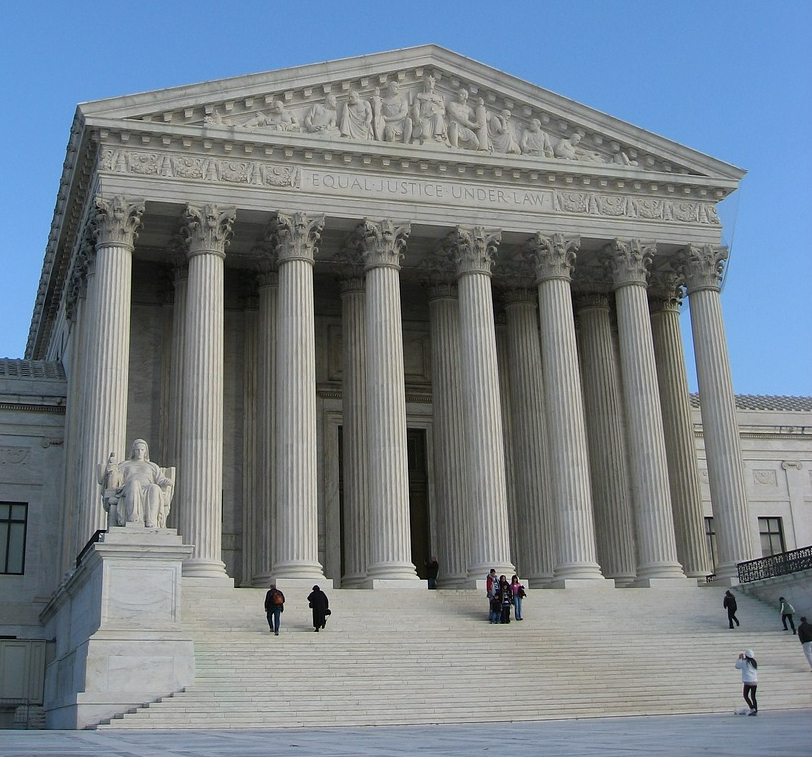
The corrupting influence of money in politics is not new. The Tillman Act of 1907 banned corporate contributions to election campaigns. The Taft-Hartley Act of 1947 prohibited unions and corporations from making independent expenditures in support of or in opposition to federal candidates. However, most of these provisions were struck down by the U.S. Supreme Court in the landmark 1976 Buckley v. Valeo ruling that equated political contributions with speech, making limits a violation of the First Amendment. The Federal Election Campaign Act of 1971 and the Bipartisan Campaign Reform Act of 2002 sought to limit campaign spending on political advertising and independent spending by corporations and unions to support candidates or issues. Once again, the Supreme Court in Citizens United v. Federal Election Commission (2010) declared these limits to be in violation of the First Amendment.
Money & Free Speech
So is money equivalent to speech? Are corporations equivalent to citizens that have first amendment rights? If we treat them so, then the speech of corporations and billionaires drowns out the rest of us. Regardless of these philosophical questions, we need to look at what is best for the country and the people in it. Do we want to be a country where the richest few have most of the political power and influence? Or do we want to be a representative democracy where equality matters?
Dark Money

The Citizens United ruling opened up a gaping hole for “dark money”, holding that spending by outside groups to support or attack candidates cannot be limited. While Super PACS need to disclose donors, corporations or people can donate money through a shell company or 501(c)4 “social welfare” nonprofit to hide the original source. The major influence of dark money is new. In the 2006 election cycle, there was less than $5.2 million in dark campaign spending, but Open Secrets has tracked over $2.8 billion in dark money contributions since 2010. So not only do we have megadonors drowning out our voice, we don’t even know who is influencing our elections and gaining favor with our elected officials. Foreign governments like China, Russia, Saudi Arabia, and Iran have a lot to gain by influencing American policy, the financial means to do so, and we’ve opened the door.
Dialing for Dollars

Members of congress are not allowed to do fundraising at their congressional offices. So the Democratic and Republican parties have set up call centers down the street where they are expected to spend about 20 – 30 hours per week calling donors to ask for money. More than half of the time they should be legislating, they are working the phones and following a script, trying to amass the funds to win their next election and pay their “dues” to the party.
So what can we do?
The Supreme Court has made it very difficult to tackle this problem. I hope that a future case may overturn the decisions of Buckley and Citizens United, allowing limits on contributions and spending that are in the best interest of our country. However, I don’t think we can just wait and hope…there are things we can do now.

As individuals, we can avoid being manipulated by the ads these dollars are spent on. The most important thing we can all do is make sure that we are all paying attention to the issues, seeking truth, and asking good questions of our candidates…carefully considering how paid advertisements may be twisting the facts. If the ad spending is not what wins elections, the incentive to fund them goes away.
There are also things we should do from a policy standpoint:

- Close the gaping dark money window by requiring transparency. We need to know who is influencing our elections and gaining favor with our leaders. Strengthen reporting requirements and prohibit campaign & PAC donations from 501(c)4 organizations and shell companies.
- Get our leaders out of the telemarketing business. Put limits to 5 hours per week that they can spend on fundraising communications or attendance at events resulting in donations. Maybe zero when congress is in session. They can leave the fundraising up to their staff.
- Increase public financing and provide people with vouchers that can be used to support candidates of their choice. The idea here is that if we can’t limit the corporate spending, we can at least compete with it. The Supreme Court has ruled that government can make spending limits conditional on taking public money, so if the public money is big enough, maybe politicians will take it and get off the fundraising treadmill. This would also open up the door for more candidates that don’t have the corporate connections and mega-donors backing them.
- Eliminate the corrupting influence of lobbyists by prohibiting donations from lobbying organizations to campaigns, and closing the “revolving door” where members of congress are rewarded with high paying jobs from the lobbying firms after their time in office. Lobbying with ideas and information is fine, but what we have is more like bribery.
- Require participation in debates for eligibility in elections – candidates with the best name recognition or polling leads are starting to avoid debates due to the risk that they could lose the contest of ideas. They owe it to voters to participate in the contest and answer difficult questions. If we can increase opportunities for candidates to get their message out besides advertising, maybe we can make elections about the substance again.
I’m sure there are other ideas out there, so I’d love to hear yours in the comments!
Resources you may want to check out

 We Can Be Better
Leave a comment